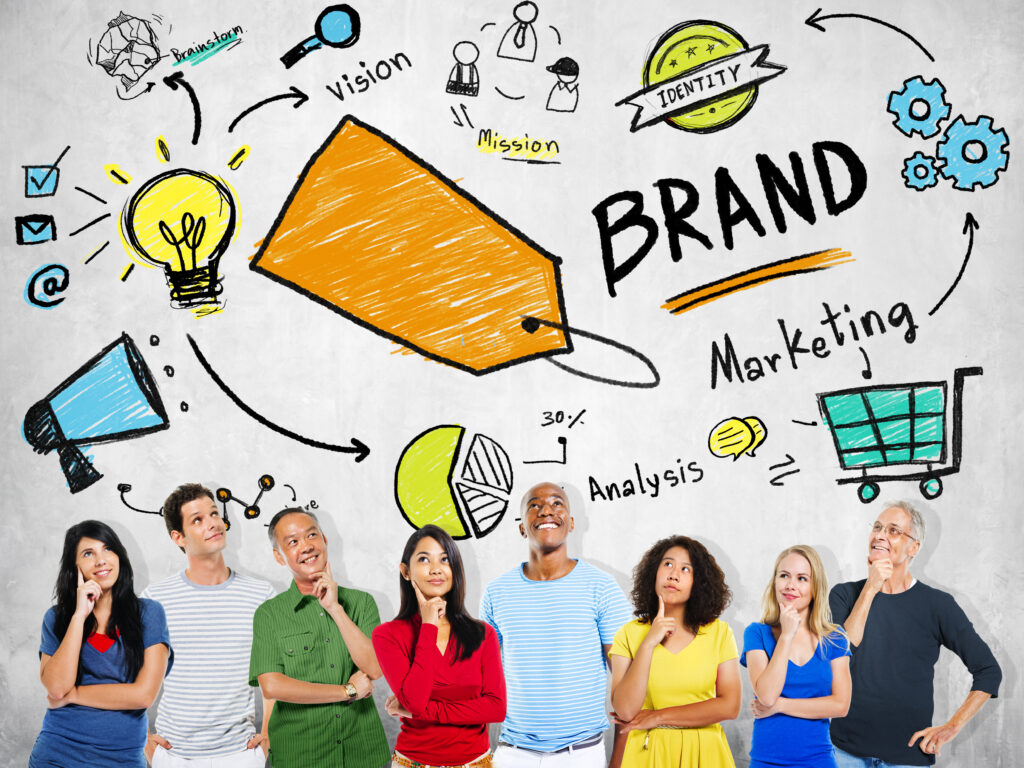
In today’s competitive landscape, branding and marketing are the twin pillars that define how startups and small to mid-sized businesses (SMBs) connect with their audiences. While intertwined, these disciplines serve distinct purposes. Branding is the art of crafting a memorable identity—encompassing a business’s name, logo, values, and personality—that resonates emotionally with customers. It fosters recognition and loyalty, creating a lasting impression that elevates a company’s value.
Marketing, conversely, is the tactical engine driving visibility and sales through targeted campaigns, digital strategies, and customer engagement. For startups and SMBs, harmonizing branding and marketing is critical to building a cohesive identity and achieving sustainable growth.
Branding establishes a business’s soul, shaping its long-term reputation through consistent storytelling and visual coherence. Marketing, on the other hand, focuses on immediate impact—leveraging data-driven campaigns to capture attention and convert leads. Together, they form a symbiotic relationship: branding lays the foundation for trust, while marketing amplifies reach and revenue.
Explore our digital marketing solutions.
Core Elements of Branding and Marketing
-
Branding: Anchored in a company’s mission, vision, and values, branding creates a unified identity through visual elements (logos, typography, color schemes) and a distinct voice. It builds emotional connections, fostering loyalty and enhancing brand equity—the intangible value that sets a business apart.
-
Marketing: Driven by measurable objectives, marketing employs dynamic strategies across channels like social media, email, and search engines. It uses analytics (e.g., conversion rates, click-through rates) to optimize campaigns, ensuring they resonate with audiences and deliver tangible results.
Top 10 Essential Branding and Marketing Terms
-
Brand: The holistic perception of a business, shaped by its visuals, messaging, and customer experiences.
-
Brand Identity: The tangible elements—logos, fonts, colors—that visually communicate a brand’s essence.
-
Brand Equity: The added value derived from a brand’s recognition and reputation, influencing customer loyalty and pricing power.
-
Unique Selling Proposition (USP): A distinctive feature or benefit that differentiates a product from competitors.
-
Brand Awareness: The extent to which a target audience recognizes and recalls a brand’s identity.
-
Call-to-Action (CTA): A clear directive (e.g., “Shop Now” or “Sign Up”) designed to prompt immediate customer action.
-
Search Engine Optimization (SEO): The practice of enhancing website content to rank higher on search engine results pages, driving organic traffic.
-
Conversion Rate: The percentage of users who complete a desired action, such as making a purchase or filling out a form.
-
Key Performance Indicator (KPI): Quantifiable metrics, like engagement rates or return on ad spend, used to evaluate marketing success.
-
Content Marketing: The creation and distribution of valuable content (e.g., blogs, videos, social posts) to attract, engage, and retain customers.
Real-World Branding and Marketing Success Stories
-
Global Icons: Apple’s minimalist aesthetic and Nike’s empowering “Just Do It” mantra exemplify branding that transcends products, creating cultural touchstones. Starbucks’ green mermaid logo instantly evokes its premium coffee experience.
-
Purpose-Driven Brands: Companies like Patagonia, with its environmental ethos, and Allbirds, emphasizing sustainability, weave social impact into their identities, appealing to values-driven consumers.
-
Innovative Marketing: Startups like Glossier leverage user-generated content and social media to build community and authenticity. Dollar Shave Club’s viral video campaign transformed a niche startup into a household name, showcasing the power of creative marketing.
Strategic Branding for Startups
-
Clarify Your Purpose: Define your mission and target audience. Understand the problem you solve and the customers you serve to anchor your brand’s narrative.
-
Craft Core Values and Voice: Establish values that reflect your business’s ethos (e.g., innovation, inclusivity) and a consistent tone—whether professional, approachable, or bold.
-
Design a Cohesive Identity: Develop a memorable logo, color palette, and typography that align with your brand’s personality. Simplicity and versatility ensure impact across platforms.
-
Ensure Consistency: Apply your brand identity uniformly across all touchpoints—website, packaging, social media—to reinforce recognition and trust.
-
Launch with Impact: Introduce your brand through integrated campaigns that highlight your story and values. Use storytelling to create an emotional connection with your audience.
-
Track and Refine: Monitor brand performance through metrics like social media sentiment, customer feedback, and brand recall. Adapt based on insights to strengthen your identity over time.
Developing a Marketing Strategy for SMBs
-
Define Measurable Goals: Set specific, achievable objectives, such as increasing website traffic by 20% or boosting sales by 10%. Align goals with your broader business vision.
-
Understand Your Audience: Conduct research to identify your customers’ demographics, behaviors, and pain points. This informs tailored messaging and channel selection.
-
Select Optimal Channels: Choose platforms where your audience is active—social media, search engines, or email. Balance digital tactics (e.g., SEO, paid ads) with offline efforts (e.g., events, print).
-
Create Compelling Content: Develop high-quality content—blogs, videos, infographics—that aligns with your brand and includes strong CTAs to drive engagement.
-
Execute and Allocate Resources: Distribute your budget across channels based on expected ROI. Launch campaigns with clear timelines and measurable outcomes.
-
Analyze and Optimize: Use analytics tools to track KPIs like traffic, engagement, and conversions. Refine campaigns by amplifying what works and pivoting from underperforming tactics.
-
Stay Agile: Continuously test new approaches, such as emerging platforms or trends, to keep your marketing fresh and responsive to market shifts.
Learn more about our website SEO services in Vizag.
The Evolution of Branding and Marketing
The digital era has transformed branding and marketing. Where traditional branding relied on static logos and print ads, modern strategies embrace dynamic storytelling through social media and immersive experiences. Marketing has shifted from broad campaigns to hyper-personalized, data-driven approaches, leveraging AI and analytics to target audiences with precision. For startups and SMBs, this evolution offers opportunities to compete with larger players by focusing on authenticity, agility, and customer-centricity.
By aligning a robust brand identity with strategic marketing, startups and SMBs can create meaningful connections, drive growth, and build lasting equity in a crowded marketplace.
Conclusion:
Are you a startup or SMB looking for a trusted branding and marketing partner in Vizag? Lead Gen Marketers is a trusted team of digital marketing and branding experts who can leverage modern marketing strategies for your business growth and success. As a trusted digital marketing company in Vizag, we help thriving businesses grow successfully.
Reach us for digital marketing services today.
PC: Rawpixel and Freepik
Recent Posts
-
 Significance of Social Media Marketing and Digital Marketing for Women-Owned Businesses
 -
 Digital Marketing Services for Doctors and Hospitals in Vizag
 -
 Keyword Research for Websites: A Practical Guide to Low‑Competition SEO Wins
 -
 How to Gain Organic Traffic for Website Success: 8 Proven Strategies
 -
 Blogging for Startups and Growing Businesses: Is It Still Relevant in 2026?