In today’s saturated digital landscape, understanding and leveraging diverse social media content formats is crucial for cutting through the noise and capturing your audience’s attention. With over 4.8 billion social media users worldwide consuming content at an unprecedented rate, businesses must master various content types to maintain relevance and drive meaningful engagement.
The evolution of social media content has transformed from simple text posts to immersive, interactive experiences that cater to different learning styles, preferences, and consumption habits. A strategic approach to content formats not only enhances your content strategy but also ensures maximum reach across diverse audience segments.
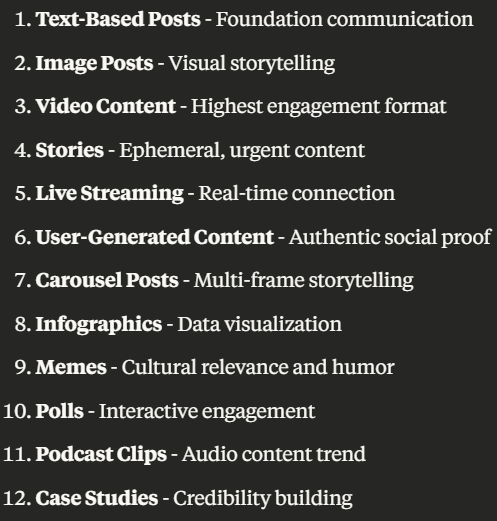
This comprehensive guide explores 15 essential social media content formats that form the backbone of successful content marketing campaigns. Each format serves unique purposes, appeals to different audience behaviors, and contributes to building a robust content ecosystem that drives engagement, builds brand awareness, and generates leads.
But before that, learn about the top social media marketing mistakes to avoid in 2025.
15 Best Social Media Content Formats in 2025
1. Text-Based Posts: The Foundation of Social Communication
Significance: Text posts remain the most fundamental and accessible social media content formats. They require minimal resources while offering maximum flexibility for sharing thoughts, insights, and engaging in conversations.
Use Cases:
- Sharing industry insights and thought leadership
- Asking questions to encourage community discussion
- Making announcements and updates
- Providing quick tips and advice
- Sharing inspirational quotes or motivational content
Engagement Benefits: Text posts encourage comments and discussions, making them ideal for building community engagement. They’re particularly effective on platforms like LinkedIn for professional discourse and Twitter for real-time conversations. Research shows that posts with questions generate 100% more comments than standard posts.
Best Practices: Keep text concise but valuable, use compelling hooks in the first line, include relevant hashtags, and always include a call-to-action to encourage interaction. [Reference]
2. Image Posts: Visual Storytelling at Its Core
Significance: Images are processed 60,000 times faster than text by the human brain, making them one of the most powerful social media content formats for immediate impact and engagement.
Use Cases:
- Product showcases and demonstrations
- Behind-the-scenes glimpses of business operations
- Infographics presenting data or processes
- Team photos and company culture content
- User-generated content featuring customers
Engagement Benefits: Visual content receives 94% more views than text-only posts. High-quality images stop the scroll, increase brand recall, and significantly improve click-through rates. They’re essential for platforms like Instagram and Pinterest where visual appeal drives engagement.
Best Practices: Ensure high resolution, maintain brand consistency, optimize for each platform’s dimensions, include alt text for accessibility, and use compelling captions that complement the visual narrative.
3. Video Content: The King of Engagement
Significance: Video content has become the dominant force in social media content, with users spending 88% more time on websites with video content. This format offers the highest engagement rates across all platforms.
Use Cases:
- Product demonstrations and tutorials
- Customer testimonials and case studies
- Live streaming events and Q&A sessions
- Educational content and how-to guides
- Entertainment and storytelling content
Engagement Benefits: Videos generate 1200% more shares than text and image posts combined. They increase dwell time, improve SEO rankings, and build stronger emotional connections with audiences. Video content also benefits from algorithm preferences on most platforms.
Best Practices: Create compelling thumbnails, add captions for accessibility, keep videos concise (under 2 minutes for most platforms), include clear calls-to-action, and optimize for mobile viewing.
4. Stories and Ephemeral Content
Significance: Stories represent one of the fastest-growing social media content formats, with over 500 million people using Instagram Stories daily. This temporary content creates urgency and authenticity.
Use Cases:
- Daily business updates and announcements
- Behind-the-scenes content showing company culture
- Time-sensitive promotions and flash sales
- Quick polls and questions for audience feedback
- Event coverage and real-time updates
Engagement Benefits: Stories feel more authentic and personal, leading to higher engagement rates. They’re perfect for showing personality, building relationships, and creating FOMO (fear of missing out). The temporary nature encourages immediate interaction.
Best Practices: Use interactive features like polls, questions, and quizzes, maintain visual consistency with brand colors, post regularly to stay top-of-mind, and save important stories as highlights.
5. Live Streaming: Real-Time Connection
Significance: Live streaming creates unprecedented intimacy and authenticity in social media content, allowing real-time interaction between brands and audiences.
Use Cases:
- Product launches and demonstrations
- Expert interviews and panel discussions
- Q&A sessions and customer support
- Behind-the-scenes tours and events
- Educational workshops and training sessions
Engagement Benefits: Live content generates 6 times more engagement than regular video content. It builds trust through transparency, creates urgency, and allows immediate audience feedback and interaction.
Best Practices: Promote live sessions in advance, prepare talking points while remaining spontaneous, engage with comments in real-time, ensure stable internet connection, and repurpose live content afterward.
6. User-Generated Content (UGC)
Significance: UGC represents authentic content marketing that leverages your customers’ voices to build credibility and trust. It’s one of the most cost-effective social media content formats.
Use Cases:
- Customer reviews and testimonials
- Product usage photos and videos
- Contest and campaign submissions
- Community challenges and hashtag campaigns
- Customer success stories and case studies
Engagement Benefits: UGC builds social proof, increases trust, and encourages community participation. It generates 28% higher engagement rates than brand-created content and significantly influences purchasing decisions.
Best Practices: Create clear guidelines for submissions, always credit original creators, obtain proper permissions, feature diverse customers, and create campaigns that encourage natural sharing.
7. Carousel Posts: Multi-Frame Storytelling
Significance: Carousel posts allow brands to share multiple images or videos in a single post, making them versatile social media content formats for comprehensive storytelling.
Use Cases:
- Step-by-step tutorials and guides
- Product catalogs and feature highlights
- Before-and-after transformations
- Multi-part stories and narratives
- Statistical data and infographic series
Engagement Benefits: Carousels generate 1.4 times more reach and 3.1 times more engagement than single-image posts. They encourage users to spend more time with your content and provide multiple opportunities for engagement.
Best Practices: Design each slide to stand alone while contributing to the overall narrative, use consistent visual styling, include compelling cover images, and end with clear calls-to-action.
8. Infographics: Data-Driven Visual Content
Significance: Infographics combine visual appeal with informational value, making complex data digestible and shareable. They’re essential content formats for thought leadership and education.
Use Cases:
- Industry statistics and research findings
- Process explanations and workflows
- Comparison charts and feature matrices
- Timeline presentations and historical data
- Tips and best practices compilations
Engagement Benefits: Infographics are shared 3 times more than other content types and increase traffic by 12%. They position brands as knowledgeable resources and improve content longevity.
Best Practices: Focus on one key message, use clear hierarchies and visual flow, maintain brand consistency, include data sources, and optimize for mobile viewing.
9. Memes and Trending Content
Significance: Memes and trending content tap into cultural moments and shared experiences, making brands more relatable and approachable through humorous social media content.
Use Cases:
- Industry humor and inside jokes
- Trending topic commentary
- Relatable workplace or customer experiences
- Pop culture references and current events
- Light-hearted brand personality content
Engagement Benefits: Memes can go viral quickly, dramatically increasing reach and brand awareness. They humanize brands and create emotional connections through shared humor and cultural references.
Best Practices: Stay authentic to your brand voice, be timely with trends, avoid controversial topics, ensure appropriateness for your audience, and don’t force humor if it doesn’t fit naturally.
Learn more about Branding and Marketing in 2025.
10. Polls and Interactive Content
Significance: Interactive content formats transform passive consumption into active participation, providing valuable audience insights while boosting engagement metrics.
Use Cases:
- Market research and customer preferences
- Product feedback and feature requests
- Educational quizzes and assessments
- Entertainment and personality tests
- Decision-making assistance and recommendations
Engagement Benefits: Interactive content generates 2 times more engagement than static content. It provides valuable data about audience preferences while making followers feel heard and valued.
Best Practices: Ask relevant questions, provide meaningful choices, share results with your audience, use insights to inform business decisions, and create series of related polls for deeper engagement.
11. Podcast Clips and Audio Content
Significance: With the rise of audio content consumption, podcast clips and audio posts have become valuable social media content formats for reaching audiences who prefer audio learning.
Use Cases:
- Expert interview highlights
- Industry insights and commentary
- Educational content and tutorials
- Customer testimonials and success stories
- Behind-the-scenes discussions and team conversations
Engagement Benefits: Audio content allows multitasking consumption and builds intimate connections through voice. It’s particularly effective for thought leadership and establishing expertise in specific niches.
Best Practices: Create compelling visual accompaniments, provide transcripts for accessibility, keep clips concise and impactful, promote full-length content, and optimize audio quality.
12. Case Studies and Success Stories
Significance: Case studies serve as powerful content marketing tools that demonstrate real-world value and build credibility through concrete examples and results.
Use Cases:
- Customer success stories and transformations
- Problem-solving demonstrations
- ROI and performance showcases
- Process improvements and innovations
- Partnership highlights and collaborations
Engagement Benefits: Case studies build trust and credibility while providing social proof. They’re particularly effective for B2B audiences and high-consideration purchases.
Best Practices: Include specific metrics and results, tell compelling stories with clear challenges and solutions, use visuals to support narratives, protect client confidentiality when necessary, and make results relatable to prospects.
13. Educational and How-To Content Strategy
Significance: Educational content positions brands as helpful resources while providing genuine value to audiences. This best content to post on social media builds long-term relationships and trust.
Use Cases:
- Step-by-step tutorials and guides
- Industry best practices and tips
- Tool recommendations and reviews
- Skill development and training content
- FAQ responses and troubleshooting guides
Engagement Benefits: Educational content has a longer shelf life and generates sustained engagement over time. It positions brands as thought leaders and increases customer loyalty through value provision.
Best Practices: Address common questions and pain points, break complex topics into digestible steps, use clear visuals and examples, encourage questions and feedback, and update content regularly.
14. Behind-the-Scenes Content Format
Significance: Behind-the-scenes content humanizes brands and builds authentic connections by showing the people and processes behind products and services.
Use Cases:
- Office culture and team spotlights
- Product development and manufacturing processes
- Event preparation and execution
- Daily operations and workflows
- Leadership insights and company values
Engagement Benefits: This content builds trust through transparency and creates emotional connections with audiences. It’s particularly effective for building brand loyalty and attracting talent.
Best Practices: Show genuine moments rather than overly polished content, highlight diverse team members, explain processes in accessible language, respect privacy boundaries, and maintain professional standards.
15. Contests and Giveaways
Significance: Contests and giveaways rapidly increase engagement, followers, and brand awareness while providing valuable user data and content.
Use Cases:
- Product launches and promotions
- Milestone celebrations and anniversaries
- Seasonal campaigns and holiday promotions
- Community building and engagement drives
- Email list building and lead generation
Engagement Benefits: Contests can increase engagement by up to 64% and significantly boost follower growth. They create excitement and encourage sharing, amplifying reach organically.
Best Practices: Establish clear rules and terms, choose relevant prizes, promote across multiple channels, comply with platform guidelines, follow up with participants, and analyze results for future improvements.
How to Develop Your Content Format Strategy
Successful content strategy requires understanding which social media content formats resonate most with your specific audience. Consider these factors when selecting formats:
Audience Preferences: Analyze your audience demographics, platform usage patterns, and engagement data to identify preferred content types.
Platform Algorithms: Different platforms favor different content formats. Stay updated on algorithm changes and optimize your content mix accordingly.
Resource Allocation: Consider your team’s skills, time constraints, and budget when planning content format distribution.
Business Objectives: Align content formats with specific goals—awareness, engagement, lead generation, or sales conversion.
Content Calendar Integration: Plan diverse content formats across your posting schedule to maintain audience interest and accommodate different consumption preferences.
Measuring Content Format Performance
Track these key metrics to optimize your social media content strategy:
- Engagement rates by content format
- Reach and impressions across different types
- Click-through rates and website traffic
- Conversion rates and lead generation
- Audience growth and retention
- Share rates and viral potential
- Time spent consuming content
- Comments quality and sentiment
Conclusion: Mastering the Art of Social Media Content Strategy
The landscape of social media content formats continues evolving, but the fundamental principle remains constant: diversity drives engagement. Successful brands understand that different audience segments prefer different content types, and varying formats serve different stages of the customer journey.
By implementing a strategic mix of these 15 social media content formats, you’ll create a dynamic content ecosystem that engages diverse audiences, builds brand authority, and drives meaningful business results. Remember that consistency in quality and authenticity in messaging matter more than perfection in execution.
The best content to post on social media is content that provides value, resonates with your audience, and aligns with your business objectives. Start with formats that match your resources and audience preferences, then gradually expand your repertoire as you build confidence and capabilities.
Your content strategy should be a living document that evolves based on performance data, audience feedback, and platform changes. By mastering these diverse content formats, you’ll build a sustainable competitive advantage in the crowded social media landscape.
The future belongs to brands that can effectively communicate through multiple content formats while maintaining authentic connections with their audiences. Start implementing these formats today, and watch your social media engagement transform from ordinary to extraordinary.
At Lead Gen Marketers, we help small businesses create engaging content that resonate with their audience requirements and business goals. Reach us for digital marketing services in Vizag.
Recent Posts
-
 Significance of Social Media Marketing and Digital Marketing for Women-Owned Businesses
 -
 Digital Marketing Services for Doctors and Hospitals in Vizag
 -
 Keyword Research for Websites: A Practical Guide to Low‑Competition SEO Wins
 -
 How to Gain Organic Traffic for Website Success: 8 Proven Strategies
 -
 Blogging for Startups and Growing Businesses: Is It Still Relevant in 2026?